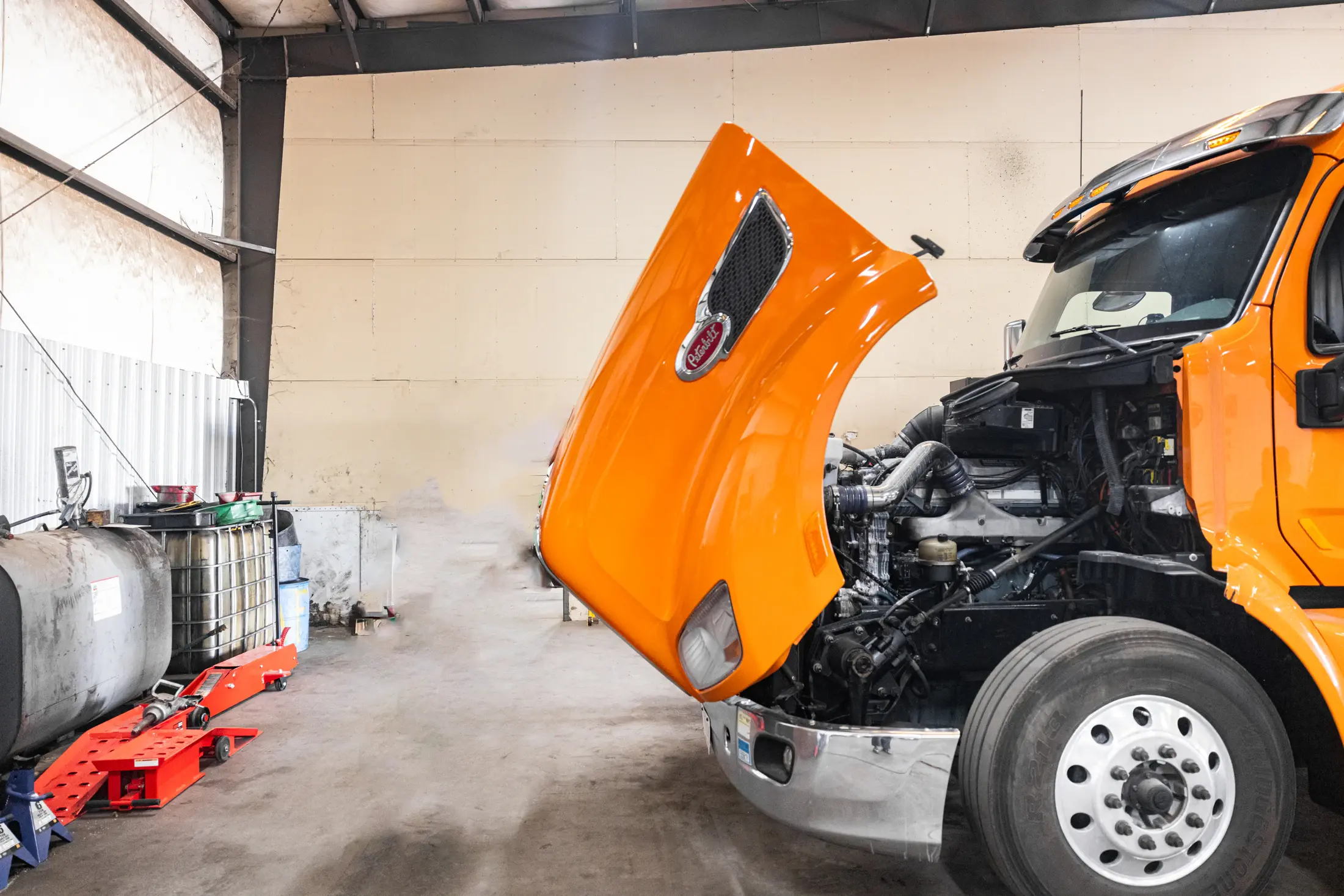
Truck Starter Troubleshooting: Check This First
Truck Starter Troubleshooting: Check This First
A work truck that will not crank can stop a crew before the first job of the day. The key to effective truck starter troubleshooting is separating a true starter failure from a weak battery, bad connection, safety interlock issue, or engine problem. Replacing parts before testing wastes time and can leave the truck parked with the same no-start condition.
Start by Identifying the No-Start Condition
The sound and behavior at the key tell you where to begin. A single click, rapid clicking, slow cranking, or complete silence are different problems with different likely causes.
If the engine cranks at normal speed but will not fire, the starter is doing its job. Focus on fuel delivery, air, glow plugs or intake heaters on a diesel, sensors, or engine management. A starter diagnosis applies when the engine does not crank or cranks too slowly to start.
A single solid click may mean the starter solenoid is engaging but the motor is not turning. It can also happen when battery voltage drops under load or when cable resistance is too high. Rapid clicking usually points to low available battery power. Silence can be a failed relay, blown fuse, bad ignition switch, neutral safety issue, damaged wiring, or a starter solenoid that is not receiving a command.
Truck Starter Troubleshooting Begins at the Batteries
Many starter calls are battery or cable problems, especially on commercial trucks with multiple batteries. A battery can show acceptable voltage with no load and still fail when the starter demands high current.
Check battery state of charge first. A fully charged 12-volt battery should generally rest near 12.6 volts. On a 24-volt system, evaluate each battery individually as well as the complete system. Voltage alone is not a final answer, but it is a useful first check.
Next, watch voltage while attempting to crank. A major voltage drop points toward discharged batteries, a weak battery, poor connections, or excessive starter draw. Load testing is more dependable than judging a battery by its resting voltage. In a multi-battery setup, one weak battery can pull down the entire starting system.
Inspect terminals carefully. Loose clamps, corrosion between the terminal and post, swollen cables, broken terminal ends, and poor chassis grounds create resistance that may not be obvious from the driver’s seat. On trucks working near the coast or exposed to job-site moisture, corrosion can build quickly.
Do not overlook the ground side. The starter needs a complete path back to the battery. Check the negative battery cables, frame grounds, engine ground straps, and connections at the block. A ground strap with internal corrosion can look acceptable while causing a no-crank condition.
Check the Cables Under Load
A visual inspection does not always find a cable problem. Voltage-drop testing while the starter is commanded on is the practical way to locate excessive resistance.
Test the positive side from the battery positive terminal to the starter B+ terminal. Then test the ground side from the starter housing or engine block back to battery negative. High voltage drop on either side means current is being lost through a cable, connection, terminal, fuse link, or ground path.
This test matters because a starter needs heavy amperage. A small amount of resistance that would not affect lights or accessories can prevent a diesel engine from cranking. Replacing a starter without checking voltage drop is a common and expensive mistake.
Confirm the Starter Is Receiving a Start Signal
Once battery condition and primary cables check out, verify that the starter solenoid receives power at the small trigger terminal when the key is turned to START. If there is no trigger signal, the starter itself may be fine.
The missing signal can come from several places: the ignition switch, starter relay, fuse, wiring, body control module, engine control module, clutch switch, park/neutral safety switch, or an anti-theft system. The exact circuit depends on the truck.
Automatic trucks must recognize Park or Neutral before cranking. Try starting in Neutral while holding the brake, if it is safe to do so. A truck that starts in Neutral but not Park may have a shift linkage adjustment issue or a failing range sensor. Manual-transmission trucks often use a clutch safety switch that can fail or move out of adjustment.
On newer commercial vehicles, diagnostic trouble codes and live data can show whether the module sees a valid start request and a Park/Neutral or clutch-pedal input. That prevents unnecessary work on the starter when the problem is in the control circuit.
When the Starter Is the Problem
A starter becomes the leading suspect when batteries pass load testing, cable voltage drop is within specification, the engine can turn, and the solenoid receives the proper trigger signal but the starter will not operate correctly.
Common starter failures include worn brushes, a damaged commutator, burned solenoid contacts, an open internal winding, or a drive mechanism that will not engage the flywheel. Heat can also expose an internal failure. A truck may start cold, run all day, then refuse to crank after a short stop until the starter cools down.
Intermittent operation is worth taking seriously. If tapping the starter causes it to work, internal wear is likely, but that is a diagnostic clue, not a repair. It may get a truck moving once, but it can also leave it stranded at the next stop.
Before installing a replacement starter, inspect the mounting surface, main cable connection, trigger wire, and ring gear condition. A damaged flywheel ring gear or loose starter mounting can prevent proper engagement and quickly damage a new unit.
Rule Out a Mechanical Engine Problem
A starter that clicks hard or draws excessive current may be fighting more than an electrical problem. A seized accessory, hydrolocked cylinder, failed engine component, or locked-up engine can keep the crankshaft from turning.
Verify that the engine can be rotated by hand using the correct procedure and tools. On diesel engines, do not force rotation without understanding why it is locked. Water intrusion, coolant intrusion, or fuel accumulation in a cylinder can cause serious damage if the engine is cranked aggressively.
If the starter spins but the engine does not, inspect the starter drive and ring gear. If the engine turns slowly despite known-good batteries and clean cables, measure current draw and investigate mechanical drag along with the starter itself.
Avoid Shortcuts That Create More Downtime
Jump-starting can help when batteries are discharged, but it does not identify why they went low. A failed alternator, parasitic draw, corroded connection, or battery nearing end of life can put the truck right back in the same position.
Avoid repeatedly cranking a truck with weak batteries. It overheats cables and starter components, adds stress to the electrical system, and can drain batteries beyond recovery. Also avoid bypassing safety switches or jumping starter terminals unless the technician understands the circuit and follows proper safety procedures. A truck can move unexpectedly, and high-current arcs can cause burns or electrical damage.
For a fleet, record the symptoms, battery test results, repairs performed, and the date. That history helps identify repeat issues on a specific unit and supports preventive replacement decisions before an intermittent starting problem becomes a roadside breakdown.
Know When Mobile Diagnostics Makes Sense
A no-crank truck at a job site is not always a tow-in repair. A technician with proper electrical test equipment can often test batteries, perform voltage-drop checks, scan control modules, verify start commands, and replace accessible components on location. That can be faster than pulling a service truck, box truck, or diesel work vehicle out of service for a shop appointment.
For fleets operating from Mexico Beach through Fort Walton Beach, Mobile Fleet Services can diagnose starting-system failures where the truck is parked, whether that is a yard, job site, customer location, or roadside. The goal is not to sell a starter. It is to identify the failed part of the starting system and get the vehicle back to work with a repair that holds.
A starter problem rarely gives much warning once it becomes a no-crank. When a truck starts slowly, clicks intermittently, or needs repeated jump-starts, schedule testing before the next dispatch depends on it.
Testimonials
Contact & Location
24/7 emergency dispatch — we're ready when you need us.