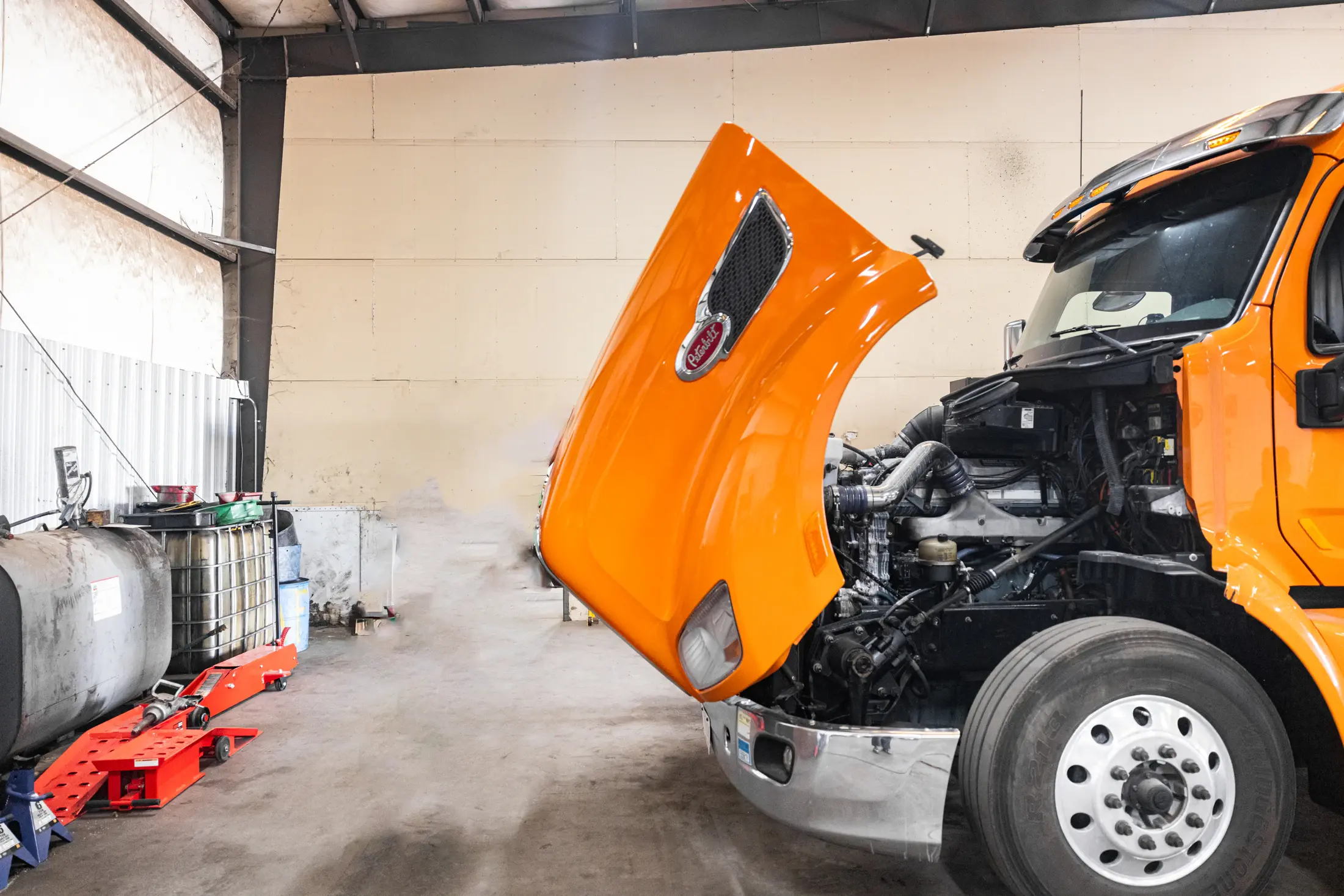
Truck Coolant Leak Diagnosis: Find It Fast
Truck Coolant Leak Diagnosis: Find It Fast
A truck that is losing coolant is already costing you time, even if the temperature gauge has not moved yet. Proper truck coolant leak diagnosis finds the source before a small seep turns into an overheated engine, a roadside breakdown, or a missed job. For commercial trucks and fleet vehicles, waiting for visible steam is usually waiting too long.
Coolant leaks can be obvious, such as a puddle under a parked truck. They can also be slow, internal, or only present when the engine is hot and the cooling system is under pressure. The goal is not to keep adding coolant. The goal is to identify why it is leaving the system and make a repair that holds up under working conditions.
Start With the Signs of a Coolant Leak
Low coolant in the reservoir is a warning, but it is not a diagnosis. A truck may lose coolant through an external leak, push it out through an overpressurized system, or consume it internally. Each problem calls for a different repair.
Look for dried coolant residue around the engine bay, radiator, hose connections, water pump, thermostat housing, heater hoses, and coolant reservoir. Depending on the coolant type, residue may be white, pink, orange, green, or yellow. It often dries into a crust that points toward the leak even when there is no active drip.
Other common warning signs include a sweet coolant odor, a heater that blows cold intermittently, frequent low-coolant alerts, visible steam, or a temperature gauge that rises higher than normal under load. On a diesel truck, reduced heater performance can appear before a major overheating event because air enters the system as coolant escapes.
Do not assume a normal temperature gauge means the truck is safe to operate. Many engines have hot spots that develop before the sensor reports a full overheating condition. A small leak can also become a large one quickly when the truck is towing, hauling, idling for extended periods, or working in Florida heat.
Truck Coolant Leak Diagnosis Requires a Cold and Hot Check
The first inspection should be performed with the engine cool. Opening a hot cooling system can cause serious burns, and it can also make it harder to inspect safely. Check coolant level and condition, then inspect the radiator cap or surge tank cap seal for damage, hardening, or contamination.
A weak cap is easy to overlook. If it cannot maintain the system's specified pressure, coolant may boil at a lower temperature or vent out before the system is truly overheated. Replacing a cap without testing the rest of the system is not always the answer, but it is a practical part of the inspection.
With the engine cold, technicians inspect hose clamps, radiator seams, plastic fittings, quick-connect fittings, the reservoir, and the thermostat housing. Rubber hoses should be checked for soft spots, cracking, swelling, abrasion, and oil contamination. A hose can look acceptable while cool but open up when it gets hot and pressurized.
The next step is to bring the vehicle to operating temperature and inspect it again. Some leaks only appear after the thermostat opens, the coolant expands, or engine vibration increases. On work trucks and heavy-duty diesels, the leak may be hidden behind accessory drives, charge-air piping, fan shrouds, or underbody shielding. A bright light and a careful inspection matter more than guessing from the location of a puddle.
Cooling System Pressure Testing
A pressure test is one of the most effective ways to locate an external leak. The technician attaches the correct tester at the radiator or surge tank, then pressurizes the cooling system to the manufacturer's recommended specification with the engine off and cool.
If pressure drops, coolant may begin to appear at the source. This can reveal leaks at hose connections, radiator tanks, heater cores, freeze plugs, water pump weep holes, EGR cooler plumbing, and fittings that do not leak while the engine is not under pressure.
Pressure testing is not a reason to force more pressure into an old system than it was designed to handle. Overpressurizing can create a new failure or mislead the diagnosis. The correct pressure and a controlled inspection produce better results.
UV Dye and Hard-to-Find Leaks
Some leaks are too small or too intermittent to find during a single pressure test. In those cases, UV dye added to the cooling system can help identify the path of the leak. After the truck is run and inspected with a UV light, even a small coolant trail can become visible.
This is especially useful for leaks around the front cover, water pump, rear heater lines, cab heater core, or radiator seams hidden by shrouds. Dye should support a diagnosis, not replace it. If coolant is disappearing but there is no external evidence, the technician needs to consider an internal leak.
Common External Leak Sources on Work Trucks
Radiators often leak at plastic tank-to-core seams, damaged fins, corroded areas, or impact points. A radiator may hold at idle but leak when the engine is working hard. Fleet trucks that operate around construction sites, coastal air, or debris-heavy roads need regular radiator and condenser inspections.
Water pumps commonly leak through a weep hole when the internal seal fails. Coolant residue behind the pulley or around the pump housing is a strong clue. Belt noise, wobble, or bearing play may appear at the same time, but not always.
Hoses and clamps remain frequent failure points because they are exposed to heat cycles, vibration, and movement. The lower radiator hose deserves close attention. It can collapse under suction if its internal support fails, creating an overheating issue that may look like a thermostat problem.
Heater cores and heater hoses can leak inside the cab or behind the firewall. A sweet smell through the vents, fogging windows, damp carpet, or unexplained coolant loss can point in that direction. On commercial vehicles, ignoring a heater-core leak can turn a manageable repair into an electrical, interior, and corrosion problem.
When There Is No Visible Coolant Leak
No puddle does not mean no leak. Internal coolant loss can occur through a failed head gasket, cracked cylinder head, damaged cylinder liner seal, EGR cooler failure, intake gasket issue, or oil cooler problem. The exact possibilities depend on the engine design.
Signs may include unexplained coolant loss, white exhaust after warm-up, combustion gases in the cooling system, persistent bubbling in the reservoir, coolant contamination in the oil, or oil contamination in the coolant. None of these signs should be judged by appearance alone. For example, light vapor from an exhaust on a cool morning is normal. Thick white smoke with a sweet odor after the engine is warm is not.
Technicians may use a combustion-gas test, cooling system pressure test, cylinder contribution information, scan-tool data, or oil and coolant inspection to narrow down the failure. Heavy-duty diesel engines may require more advanced testing because a small internal leak can be difficult to isolate early.
Continuing to run a truck with a suspected internal coolant leak risks bearing damage, cylinder damage, hydro-lock, emissions-system damage, and a much larger repair bill. This is one situation where taking the truck out of service for a correct diagnosis is often the least expensive decision.
Avoid the Quick Fixes That Create Bigger Repairs
Stop-leak products may seem convenient when a truck needs to finish a route or leave a job site. They can occasionally serve as a temporary emergency measure, but they also can restrict radiator passages, heater cores, EGR coolers, and other small coolant passages. They should not be treated as a normal repair strategy for fleet equipment.
Adding water instead of the correct coolant mixture can also create problems. Water reduces freeze and boil protection, can accelerate corrosion, and may not provide the additives required for a specific diesel cooling system. Use the coolant specified for the vehicle and maintain the proper mixture.
Most importantly, do not keep topping off coolant without documenting how much is being added and when. That record helps identify whether the loss is getting worse and gives a technician useful information during diagnosis.
Keep the Truck Working With Preventive Cooling-System Service
Cooling-system inspections belong in routine fleet maintenance, especially for trucks that idle, tow, haul, or operate in hot conditions. Checking coolant level, hose condition, clamps, belt-driven components, radiator cleanliness, and cap condition takes far less time than recovering from an overheated engine.
Mobile Fleet Services can inspect and diagnose cooling-system concerns at a fleet yard, job site, or roadside location across the Florida Panhandle service area. For a working truck, the best time to address a coolant leak is when it is still small enough to schedule - not when it has already stopped the day’s work.
If a driver reports low coolant, a sweet odor, an overheating warning, or a change in heater performance, treat it as a service item that needs attention now. A clear diagnosis protects the engine, the schedule, and the next job on the board.
Testimonials
Contact & Location
24/7 emergency dispatch — we're ready when you need us.