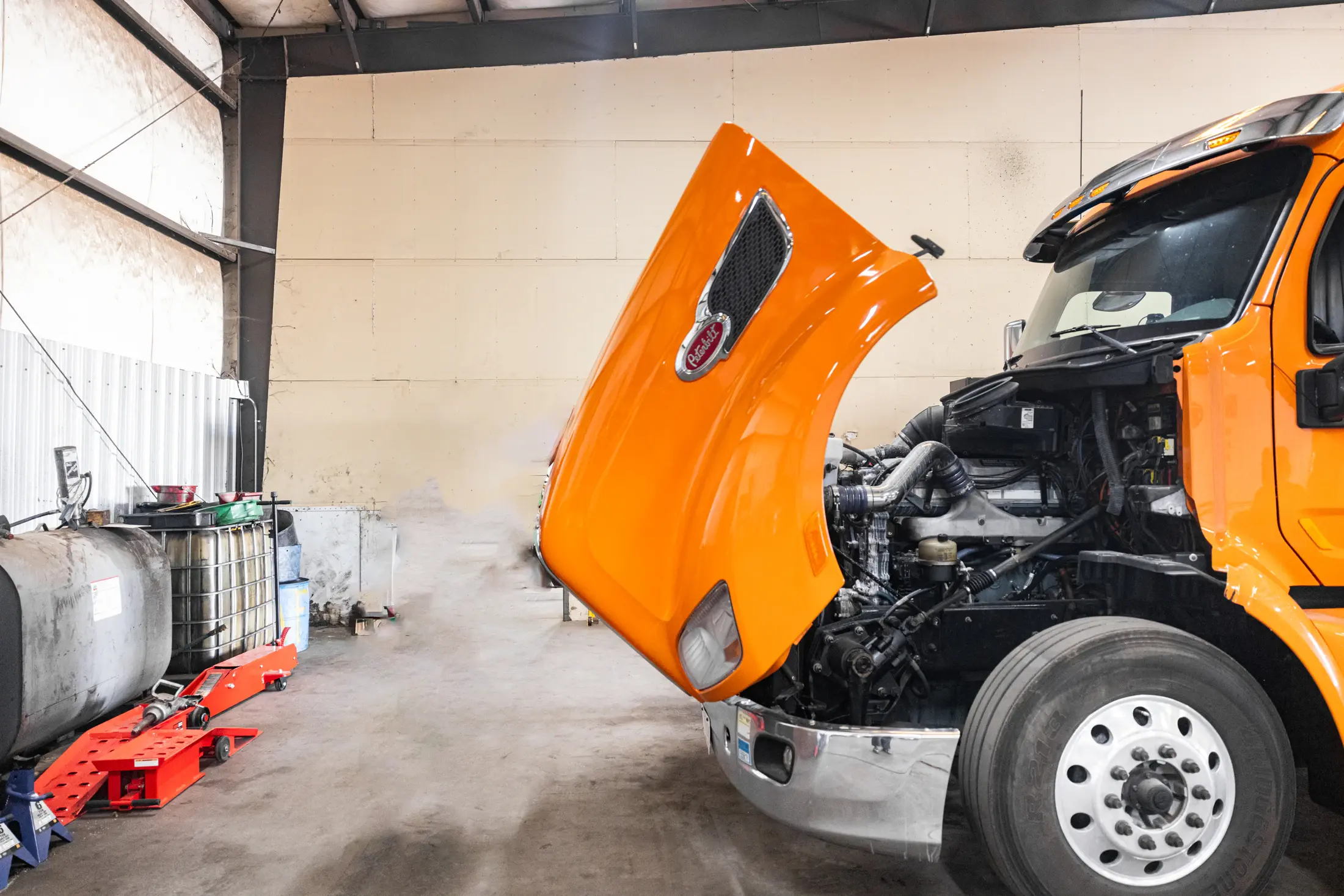
Semi Truck Repair That Cuts Costly Downtime
Semi Truck Repair That Cuts Costly Downtime
A truck that loses power on a delivery route, develops an air leak at a job site, or throws a warning light before a scheduled load is not just a mechanical problem. It is lost production, missed commitments, and a crew waiting on equipment. Effective semi truck repair starts with making the right decision early: determine whether the truck can safely continue, needs immediate attention, or should be taken out of service before a minor issue becomes a major repair.
For owner-operators, fleet managers, and contractors running heavy-duty trucks, the goal is simple: get a clear diagnosis, make the necessary repair, and prevent the same issue from stopping the truck again.
Know When Semi Truck Repair Cannot Wait
Some issues can be scheduled around a route or job. Others can quickly damage expensive components, create a safety risk, or result in a roadside shutdown. Waiting for a convenient time is rarely the less expensive option when the problem involves brakes, steering, cooling, oil pressure, or an active fault that affects engine operation.
A driver should stop and report the issue immediately when there is low oil pressure, high engine temperature, a brake warning, loss of air pressure, heavy smoke, a strong fuel smell, significant coolant loss, or a noticeable change in steering or braking. Continuing to drive can turn a failed hose, sensor, or air fitting into engine damage, brake damage, or a recovery situation.
The same applies to a truck that repeatedly enters derate or loses power under load. A derate is not a warning to ignore until the next service interval. It is the truck's control system limiting performance because it has detected a condition that may affect emissions equipment, engine protection, or safe operation. The cause may be relatively straightforward, but it needs proper diagnostics instead of guesswork.
Start With a Clear Fault Report
Good repairs begin before a technician arrives. A vague report such as "the truck is acting up" makes diagnosis slower. A useful report identifies what happened, when it started, what warning lights are on, and whether the truck can move.
Drivers should document the fault code if it is available, the engine temperature and oil pressure readings, the type of fluid leaking, and whether the issue occurs at idle, under load, while turning, or during braking. A short video of an air leak, unusual noise, smoke condition, or dash message can also save time.
This information does not replace a hands-on inspection. It gives the technician a better starting point and helps determine which tools, parts, and diagnostic equipment may be needed. For a mobile repair call, that preparation can mean the difference between a single service visit and a return trip.
Common Problems That Cause Unplanned Downtime
Semi-truck failures often begin with small changes that are easy to overlook during a busy week. A minor coolant leak, a slow air loss, or a hard-start condition may not stop the truck today. Left unresolved, it can create a much larger interruption later.
Air System and Brake Issues
Air leaks are among the most common causes of downtime on heavy-duty trucks and trailers. Leaking fittings, damaged air lines, worn brake chambers, faulty valves, and compressor problems can prevent the system from building or holding proper pressure. The issue may be obvious as a loud leak, but smaller leaks often appear only after the truck is parked.
Brake complaints require more than replacing worn parts. Uneven braking, pulling, poor stopping performance, or repeated brake wear can point to adjustment issues, seized components, contaminated linings, air-system faults, or trailer-related problems. A proper inspection identifies why the problem occurred so it does not return after the truck goes back to work.
Cooling System Failures
High temperatures can become expensive fast. Cooling system problems may involve hoses, clamps, radiators, charge air cooling components, water pumps, thermostats, fans, sensors, or coolant contamination. Running an overheated diesel engine risks cylinder-head damage, failed gaskets, and other repairs that take the truck out of service far longer than a hose or fan-clutch repair would have.
Drivers should never assume an overheating condition will correct itself after the truck cools down. If the temperature rises again, coolant is low, or a warning remains active, the truck needs inspection before the next load.
Electrical and Starting Problems
Modern commercial trucks rely on electrical systems for engine control, charging, lights, emissions equipment, lift gates, trailer connections, and safety systems. Corrosion, loose grounds, damaged wiring, weak batteries, alternator faults, and failed sensors can create intermittent problems that are difficult to diagnose without the right testing equipment.
Replacing parts based on a fault code alone is not a dependable repair strategy. A code identifies a system or condition, not always the failed component. Voltage testing, circuit checks, connector inspection, and verification after repair help prevent unnecessary parts replacement and repeat downtime.
Emissions and DPF Concerns
DPF and emissions-related faults deserve timely attention, particularly when the truck is used for frequent stops, idling, short routes, or low-speed job-site work. Those operating conditions can make it harder for the truck to complete normal regeneration cycles.
The answer is not always a forced regeneration. Depending on the fault, the truck may have a sensor issue, exhaust leak, dosing concern, wiring problem, excessive soot loading, or an underlying engine condition affecting the emissions system. The right repair addresses the source of the problem, then confirms the system is operating as intended.
Mobile Repair Changes the Downtime Equation
Taking a disabled truck to a shop often means arranging a tow, moving a trailer or load, and waiting for an available service bay. For a truck parked at a fleet yard, worksite, customer location, or roadside location, mobile service can eliminate much of that delay.
A qualified mobile technician can perform diagnostics, electrical repairs, brake service, preventive maintenance, trailer repairs, hydraulic repairs, and many engine-related repairs where the truck sits. This is especially useful for contractors whose work trucks and semis are staged at changing job sites rather than a central facility.
Mobile service is not the right fit for every failure. Major internal engine work, repairs requiring specialized shop equipment, or jobs involving extensive disassembly may be better handled in a shop. The practical advantage is knowing that a technician has assessed the truck first, identified the problem, and recommended the most efficient repair path instead of sending the vehicle elsewhere without answers.
For fleets operating from Mexico Beach through Fort Walton Beach and along the Panama City area, on-site support can be particularly valuable when a truck is down away from its normal yard. Mobile Fleet Services brings repair capability to the vehicle, helping crews avoid unnecessary towing and lost time when conditions allow for an on-site repair.
Preventive Maintenance Is a Production Tool
Preventive maintenance is often viewed as an expense because it takes a truck out of service when it is still running. In practice, scheduled service gives fleet owners control over when that downtime happens. A roadside failure takes control away, usually at the worst possible time.
A useful maintenance plan accounts for mileage, engine hours, idle time, load conditions, route type, and the age of the equipment. A truck making highway runs has different wear patterns than a vocational truck operating on construction sites, pulling heavy loads, or idling for long periods.
At a minimum, maintenance inspections should look beyond fluid and filter changes. Technicians should assess brake condition, tires, suspension, steering, belts, hoses, batteries, charging performance, fluid leaks, trailer connections, lighting, and active or pending fault codes. A small issue found during scheduled service can be planned around the work schedule instead of disrupting it.
Keep Repair Decisions Focused on the Work Ahead
The fastest repair is not always the best repair if it only gets the truck through one more day. At the same time, not every truck needs every component replaced at the first sign of wear. The right decision depends on safety, the severity of the fault, available parts, upcoming workload, and the expected remaining service life of the truck.
Ask for a clear explanation of what failed, what caused the failure, what repair is required now, and what should be monitored or scheduled next. That gives fleet managers the information needed to prioritize repairs without wasting money on unnecessary work.
A dependable semi truck repair plan keeps drivers informed, gives technicians accurate fault details, and addresses small problems before they interrupt a route or job. When trucks are needed to earn, haul, deliver, and keep crews supplied, planned service and fast diagnosis protect the schedule that matters most.
Testimonials
Contact & Location
24/7 emergency dispatch — we're ready when you need us.