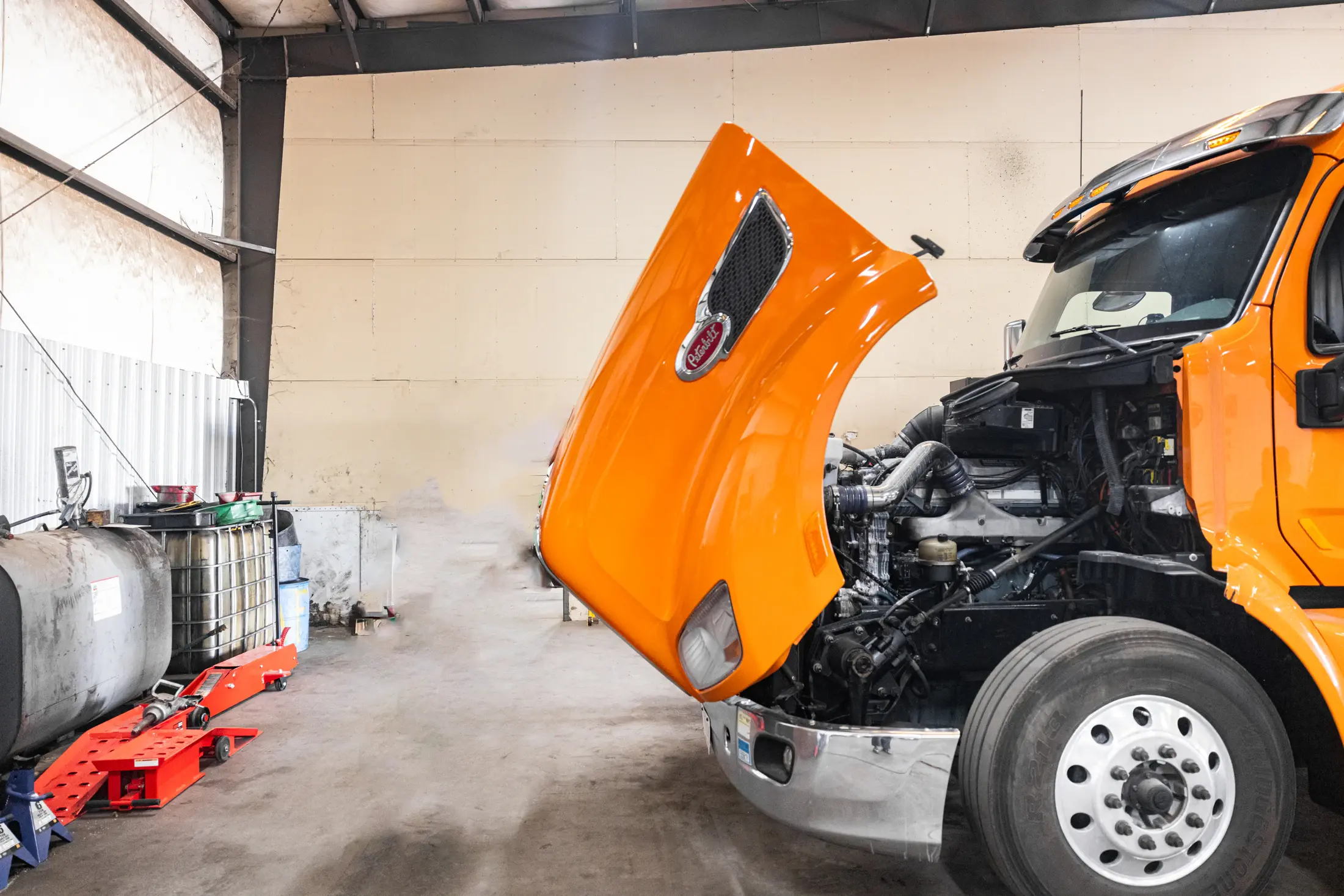
Panama City Truck Diagnostics That Cut Downtime
Panama City Truck Diagnostics That Cut Downtime
A truck that cranks slowly at the fleet yard, loses power under load, or shows an intermittent warning light is already costing money. Panama City truck diagnostics gives fleet owners and operators a clear path from a symptom to the actual fault, without replacing parts based on a guess. For contractors, delivery operations, towing companies, and service fleets, that clarity can mean the difference between finishing the day’s work and dispatching a replacement vehicle.
Modern work trucks and diesel equipment rely on connected electronic systems. An engine issue may look like a fuel problem but trace back to wiring, a sensor reference voltage, an aftertreatment fault, or a communication issue between control modules. The right diagnostic process identifies what the truck is reporting, verifies the condition, and determines what repair is needed to return it to service.
What Truck Diagnostics Should Actually Accomplish
Diagnostics are more than connecting a scan tool and reading a fault code. A code points a technician toward a system or condition. It does not automatically identify the failed part. For example, a low boost code can result from a leaking charge-air hose, restricted exhaust, a sticking turbo actuator, damaged wiring, or a sensor that is reporting incorrect data.
A productive diagnostic visit starts with the driver’s or operator’s report. When did the issue begin? Does it happen only under a loaded trailer, after the engine warms up, during rain, or at highway speed? A detailed symptom history narrows the test plan and helps prevent wasted time.
The technician then checks active and stored fault codes, freeze-frame data, live operating readings, and module communication. From there, the next steps may include visual inspection, battery and charging-system testing, electrical circuit testing, air and fluid checks, pressure tests, or a road test when conditions allow. The objective is simple: confirm the cause before authorizing repairs.
That process matters because unnecessary parts do not solve downtime. They add expense, leave the original problem in place, and can put a truck back in service only to have it fail again on the next route or job.
Common Problems Found With Panama City Truck Diagnostics
The Florida Panhandle’s heat, humidity, rain, jobsite dust, stop-and-go driving, and heavy loads can expose small weaknesses quickly. The exact failure depends on the vehicle, engine platform, maintenance history, and how the truck is used, but several systems frequently need attention.
Electrical and starting issues
Many no-start, hard-start, and intermittent shutdown concerns begin with electrical basics. Weak batteries, loose terminals, poor grounds, corroded connectors, damaged harnesses, and charging-system problems can create symptoms that appear much more serious than they are.
Electrical faults are especially frustrating because they may come and go. A truck may start normally at the yard, then fail after vibration, heat, moisture, or a voltage drop affects a connection. Testing voltage under load and checking the complete circuit is more reliable than replacing a starter, alternator, or control module based on appearance alone.
Engine performance and fuel delivery
Loss of power, rough running, excessive smoke, hard starting, poor fuel economy, and extended crank times all require a methodical approach. Fuel supply restrictions, air leaks, injector concerns, boost leaks, sensor failures, and intake restrictions can produce similar complaints.
A truck that feels weak when climbing a bridge or pulling equipment should not be ignored just because it still moves. Continued operation under a power-related fault can lead to derates, missed deliveries, or a roadside breakdown. Catching the condition early often gives the fleet more control over when and where the repair happens.
DPF, DEF, and emissions faults
Emissions systems are a common source of downtime for diesel trucks that idle frequently, make short trips, or spend long periods in low-speed operation. A DPF regeneration issue, DEF quality fault, NOx sensor problem, exhaust temperature sensor failure, or SCR-related code can eventually reduce engine power or limit vehicle operation.
The right repair depends on verified data. A stored emissions code does not always mean a component has failed. The technician needs to review soot load, regeneration history, sensor readings, exhaust conditions, wiring integrity, and related faults. Cleaning or replacing parts without finding the underlying issue can lead to repeat derates.
Brake, ABS, and trailer concerns
Brake and ABS warning lights need prompt attention, particularly on commercial units that travel with crews, materials, or trailers. Wheel-speed sensor faults, damaged tone rings, wiring damage, air-system concerns, and trailer connections can all trigger warnings or affect operation.
Trailer problems can be just as disruptive as truck problems. Lighting failures, ABS faults, lift gate issues, hydraulic concerns, and connector damage can hold up a load even when the power unit is ready to go. Diagnosing truck and trailer systems together helps prevent a partial repair that still leaves the equipment unavailable.
Why Mobile Diagnostics Change the Downtime Equation
Taking a disabled truck to a shop involves more than the repair invoice. There may be towing, driver waiting time, missed labor, rescheduling, rental costs, and lost production. For a contractor with a crew standing by or a delivery company trying to protect its route schedule, the indirect cost can exceed the repair itself.
Mobile diagnostics brings the technician to the fleet yard, job site, customer location, or roadside when safe and practical. That allows the vehicle to be evaluated where the symptom occurred and can eliminate an unnecessary tow. It also helps supervisors make faster operating decisions: repair the unit on site, move it to the yard, schedule a larger repair, or assign another truck before the day is lost.
Mobile service is not the answer for every repair. Major internal engine work, extensive fabrication, or repairs requiring specialized shop equipment may need a controlled shop environment. But for many electrical, engine performance, aftertreatment, starting, brake, trailer, and preventive maintenance concerns, on-site diagnosis can shorten the path to a decision.
Mobile Fleet Services provides on-site diagnostic support for commercial trucks, fleet vehicles, trailers, and work equipment throughout the Panama City area and across much of the Florida Panhandle. The focus is not on adding complexity. It is on finding the fault, explaining the repair, and getting the unit back to productive work.
Information That Speeds Up the Diagnostic Visit
The technician can start faster when the fleet provides a few useful details before arrival. The truck’s year, make, model, engine, VIN when available, and current location establish the basics. The fault message shown on the dash, whether the unit starts or moves, and whether it is loaded help set expectations.
Maintenance history also matters. Mention recent repairs, battery replacement, fuel-system work, wiring damage, collision damage, or new symptoms that appeared after another service. If the driver noticed smoke color, unusual noises, a loss of speed, repeated regeneration requests, or a problem tied to rain or heavy load, include that information.
For intermittent faults, avoid clearing codes before the truck is inspected unless there is an immediate operational reason. Stored data and fault history can be valuable evidence. A quick photo of the dash warning message can also help when the warning disappears before the technician arrives.
Use Diagnostics Before a Breakdown, Not Only After One
Waiting for a truck to stop running is rarely the lowest-cost approach. Warning lights, repeated fault codes, slow cranking, declining fuel mileage, changing exhaust behavior, and occasional power loss are opportunities to investigate before dispatch is affected.
Fleet managers can reduce surprise failures by tracking recurring issues by vehicle number, mileage, engine hours, and repair history. A single event may be minor. A pattern across several trucks may point to an operating condition, maintenance gap, fuel quality concern, wiring exposure, or component reaching the end of its service life.
Preventive maintenance does not eliminate every breakdown. It does make failures easier to spot earlier, when the truck can be scheduled around the work instead of sidelining the work. Regular inspection of batteries, cables, fluid levels, filters, belts, hoses, brakes, tires, trailer connections, and active fault history gives technicians more chances to find issues before they become expensive.
The Best Next Step When a Warning Light Appears
When a warning light comes on, the best response depends on what the truck is doing. A red warning, active derate, brake concern, overheating condition, severe drivability issue, or abnormal noise may require the unit to be taken out of service immediately. Continuing to operate can turn a manageable repair into major damage or create a safety risk.
For less urgent faults, record the message, note the operating conditions, and arrange diagnostics before the next critical run. Do not assume a light that goes away has fixed itself. Intermittent faults often return at the least convenient time.
A clear diagnosis gives you something more useful than a list of codes: a practical repair decision. That lets your fleet plan the work, protect the schedule, and keep the next truck ready for the job.
Testimonials
Contact & Location
24/7 emergency dispatch — we're ready when you need us.